Japan’s retail market is shifting as niche franchises gain ground, fueled by changing demographics and consumer preferences. Traditional giants like 7-Eleven face competition from specialized businesses that cater to specific needs. Here’s what’s driving this trend:
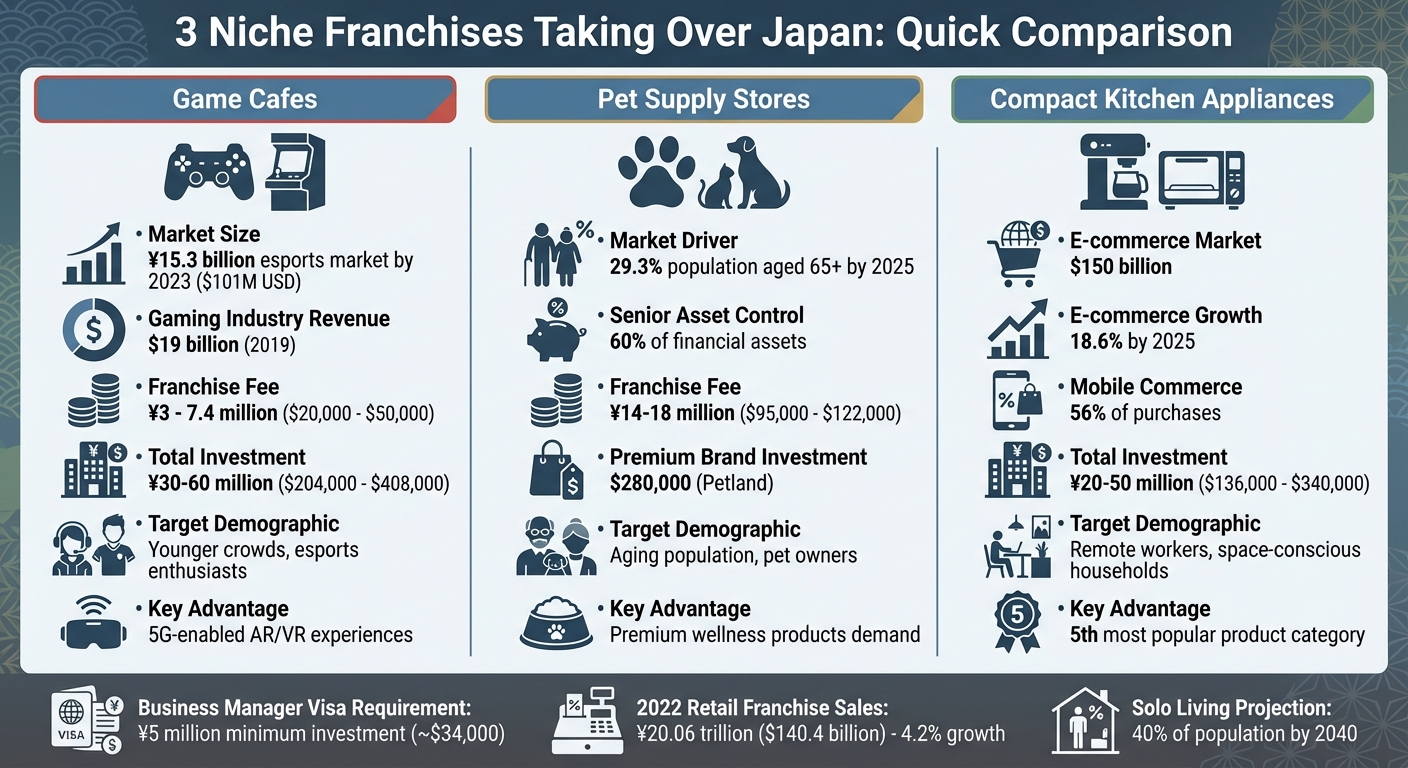
- Game Cafes: Merging gaming and café culture, these venues attract younger crowds with video games, esports, and AR/VR experiences. Startup costs range from $204,000 to $408,000, making them a viable option for investors.
- Pet Supply Stores: With over 30% of Japan’s population aged 65+, demand for premium pet products is growing. Franchise costs start at $95,000, appealing to those looking to tap into Japan’s aging population’s spending power.
- Compact Kitchen Appliance Retail: Space-saving, ergonomic appliances are popular in Japan’s small homes. Initial investments range from $136,000 to $340,000, offering opportunities for foreign brands in a $150 billion e-commerce market.
Franchising offers a cost-effective way for foreign investors to enter Japan’s market, leveraging local expertise while meeting strict regulations. These niche franchises highlight areas where smaller, focused businesses can thrive in Japan’s evolving retail landscape.
1. Game Cafes
Game cafes bring together Japan’s love for cozy café culture and its thriving gaming industry, which raked in a massive $19 billion in revenue back in 2019. These spots offer a mix of entertainment, from video games and board games to esports, all paired with café dining. It’s no wonder they’re a hit with younger crowds looking for fun, interactive experiences.
The esports market alone was expected to hit ¥15.3 billion (about $101 million) by 2023. Add to that the growing availability of 5G, which is making augmented and virtual reality experiences even more engaging in physical spaces. On top of it all, government-backed esports initiatives are paving the way for tournament-style venues. These trends make game cafes a promising business idea, especially with startup costs that are relatively easy to manage.
Startup Costs
Starting a game café franchise does require a solid financial commitment, but it holds its own compared to other niche businesses. Franchise fees typically fall between $20,000 and $50,000, while the total investment can range from ¥30 million to ¥60 million ($204,000 to $408,000).
Suitability for Foreign Investors
Game cafes are particularly appealing to foreign investors, thanks to their relatively low startup costs and Japan’s business-friendly regulations. For investors looking to make a move, these cafes can also serve as a stepping stone to residency. Japan’s Business Manager Visa requires a minimum investment of ¥5 million (around $34,000) and can eventually lead to permanent residency.
That said, there are hurdles to consider. Investors must comply with strict rules, including disclosure obligations, fair trade practices, and obtaining food service licenses. Language barriers and the need to tailor menus or layouts to suit specific neighborhoods can also pose challenges. Despite these obstacles, game cafes highlight a growing trend toward affordable franchise opportunities, offering expats a chance to tap into Japan’s evolving retail scene.
2. Pet Supply Stores
Japan’s pet supply market is thriving, fueled by an aging population that increasingly treats pets as cherished family members. With 29.3% of the population aged 65 or older by 2025, seniors control over 60% of the country’s financial assets and are spending generously – not just on their own wellness, but on their pets’ well-being too. This growing trend, often called the “humanization of pets”, has led to a demand for premium wellness products, moving away from basic supplies typically found in convenience stores. The shift reflects a broader preference for high-quality, health-focused pet items.
In 2022, Japan’s retail franchise sector saw sales climb to ¥20.06 trillion (around $140.4 billion), marking a 4.2% increase, even as the number of physical stores declined. Pet supply franchises have benefited from this growth, offering specialized products like tailored nutrition, wellness diagnostics, and organic food options – features that align with Japanese consumers’ preferences. Tokyo-based recruiter Gary Bremermann highlights the market’s potential:
“I believe there are a lot of niche opportunities in health & wellness businesses driven by an increase in the number of non-Japanese residents who look for services in English as well as an aging Japanese society where people want to stay healthy and in shape”.
Startup Costs
The booming pet supply sector offers various entry points for investors, with startup costs depending on the business model. Independent shops can get started with ¥2–4 million ($13,600–$27,200), while general franchise operations require ¥14–18 million ($95,000–$122,000). For flagship brands like Petland, initial investment starts at approximately $280,000. These figures highlight the range of opportunities available, from smaller-scale ventures to established franchise models.
Suitability for Foreign Investors
Pet supply stores stand out as an appealing option for foreign entrepreneurs, thanks to the strong consumer trust in well-known franchise brands. The Business Manager Visa requires a minimum capital of ¥5 million (about $34,000) and the hiring of at least two full-time employees. However, success hinges on adapting to local preferences – adjusting packaging sizes, ensuring visually appealing designs, and translating materials into Japanese. Investors should also allocate funds for legal and accounting services to comply with Japan’s strict regulations on disclosure and fair trade. With manageable entry costs and rising demand, pet supply franchises present a promising opportunity in Japan’s evolving retail landscape.
3. Compact Kitchen Appliance Retail
Compact kitchen appliance retail thrives in Japan by catering to the country’s preference for space-saving solutions and health-conscious cooking. Kitchen goods rank as the fifth most popular product category nationwide. The growing trend of remote and hybrid work has further boosted demand, as households increasingly invest in products that enhance home comfort and support healthier cooking habits. With e-commerce projected to grow by 18.6% by 2025, retailers have a unique opportunity to tap into both physical and online sales channels. This expanding market offers promising revenue and demographic trends.
Market Size and Growth
In 2022, Japan’s retail franchise sector generated ¥20.06 trillion (about $140.4 billion), reflecting a 4.2% growth from the previous year. The broader franchise market reached ¥26.99 trillion (approximately $189.25 billion) in the same period. Compact kitchen appliances are particularly suited to Japan’s aging population, which prioritizes space-efficient, ergonomic, and health-focused designs. These consumers gravitate toward products that align with modern, space-conscious lifestyles.
Startup Costs
Starting a business in this sector requires compliance with electronics regulations and precise product labeling, often necessitating guidance from local experts. Franchise startups typically require an initial investment of ¥20–50 million (around $136,000–$340,000), while broader startup capital usually begins at ¥6 million, with an additional ¥8–12 million allocated for operational costs.
Suitability for Foreign Investors
Compact kitchen appliance retail presents a promising opportunity for foreign investors, thanks to the market’s transparency and strong consumer demand for reliable, high-quality products. Japanese shoppers are drawn to established foreign brands that offer consistent quality and trustworthiness. As One Step Beyond explains:
“Japanese consumers famously value reliability, quality assurance, and consistent experiences. Franchising frameworks resonate with this mindset because they replicate proven concepts and standardized operations.”
To succeed, foreign investors must adapt their products to fit Japan’s compact living standards, integrate local payment methods, and optimize digital platforms. With mobile devices accounting for 56% of e-commerce purchases in Japan, a strong mobile presence is essential.
Advantages and Disadvantages
Each type of franchise comes with its own set of benefits and challenges for foreign investors looking to enter Japan’s market.
Game cafes present a strong opportunity due to Japan’s high consumer spending in the gaming sector. However, competition is intense, and success often depends on quickly adapting to local preferences.
Pet supply stores are well-positioned to benefit from Japan’s aging population, with nearly 30% of residents aged 65 and older driving demand for specialized lifestyle products. These stores are particularly appealing to foreign investors because service-oriented models tend to resonate with Japanese consumers. On the downside, strict labeling laws and safety regulations – especially for health-related pet products – can be a significant hurdle.
Compact kitchen appliance retail performs well in Japan’s robust $150 billion e-commerce market, where consumers prioritize quality over price. This preference creates opportunities for foreign brands offering well-crafted, unique products. However, challenges include meeting Japan’s strict electronics regulations and providing fast, reliable repair services to minimize product returns.
Franchising as a business model offers additional advantages. This approach reduces initial costs for foreign investors while tapping into local expertise, a major factor in Japan’s evolving retail environment. By partnering with Japanese franchisees, foreign brands can shift capital-intensive responsibilities – like site selection, real estate, staffing, and marketing – to their local counterparts. This setup not only lowers upfront expenses but also helps navigate Japan’s intricate distribution networks and varied consumer habits. To establish these partnerships, all franchises must create a KK structure, which solidifies their local presence.
Cultural adaptation and digital integration are crucial for long-term success. Foreign investors need to comply with local regulations, build consumer trust, and stay competitive in the market. Adhering strictly to the Act on the Protection of Personal Information (APPI) is particularly important for maintaining brand credibility and avoiding penalties.
Conclusion
Game cafes, pet supply stores, and compact kitchen appliance retailers are thriving opportunities in Japan’s ever-changing market. Game cafes tap into Japan’s vibrant entertainment scene, pet supply stores benefit from the growing trend of treating pets as family members, and compact kitchen appliances align perfectly with the rise in solo living – expected to encompass nearly 40% of the population by 2040.
Franchising is a smart way to enter these markets, offering lower startup costs and access to local expertise. Setting up a Kabushiki Kaisha (KK) structure is essential for navigating Japan’s complex distribution systems and meeting strict regulatory requirements, including adherence to the Act on the Protection of Personal Information (APPI).
For those ready to explore these opportunities, Nippon Bridge provides personalized support every step of the way. From establishing your company and securing a Business Manager Visa to connecting with local franchise networks, they ensure a smooth process.
To succeed in these niche markets, thorough market research tailored to Japan’s unique consumer behaviors is critical. Working with bilingual legal professionals and trusted local distributors simplifies compliance with permits and disclosure requirements, making it easier to build a successful business.
FAQs
Why should you consider investing in niche franchises in Japan instead of established brands like 7-Eleven?
Investing in niche franchises in Japan comes with some distinct perks compared to going with well-known, established brands. For starters, these franchises often operate in markets that aren’t as crowded, giving them more room to grow and face less competition. Plus, they’re tailored to meet specific consumer needs, making it easier to align with emerging trends and local tastes.
What makes niche franchises even more appealing is their focus on unique business models. This can lead to higher profit margins and open doors for fresh ideas. For investors, this translates into a chance to carve out a space in Japan’s shifting market while catering to demands that bigger, more traditional brands might miss.
How do game cafés in Japan combine gaming and café culture to appeal to younger customers?
Game cafés in Japan bring together the best of gaming and café culture, offering a cozy and social space where visitors can enjoy games while savoring food and drinks. These spots typically feature a mix of retro and modern games, giving guests the chance to revisit classics or try something new – all in a relaxed setting.
To stand out, many game cafés prioritize stylish, photo-worthy interiors that are perfect for sharing on social media. They also host special events like gaming tournaments or themed nights, adding an extra layer of excitement. This blend of entertainment, community, and visual charm has made these cafés a go-to spot for younger crowds looking for a fun and memorable outing.
What obstacles might foreign investors encounter in Japan’s compact kitchen appliance market?
Foreign investors looking to break into Japan’s compact kitchen appliance market often encounter a range of hurdles. For starters, Japanese consumers have a strong preference for products that are both high-quality and built to last, which can set a high bar for new entrants. On top of that, navigating Japan’s intricate legal and regulatory environment can be daunting, especially for those unfamiliar with the country’s business landscape. And let’s not forget the language barriers, which can complicate everything from negotiations to day-to-day communication.
Another layer of complexity comes from Japan’s distinct cultural trends and subcultures, which can evolve rapidly and may not always align with the identity of foreign brands. To succeed, companies need to go beyond surface-level adjustments and truly understand these cultural subtleties. This often means tailoring both products and marketing strategies to meet the expectations and tastes of Japanese consumers. Without this level of commitment, gaining a foothold in the market can be an uphill battle.