
General Article
Your Japan Holiday Home: A Seasonal Care Checklist
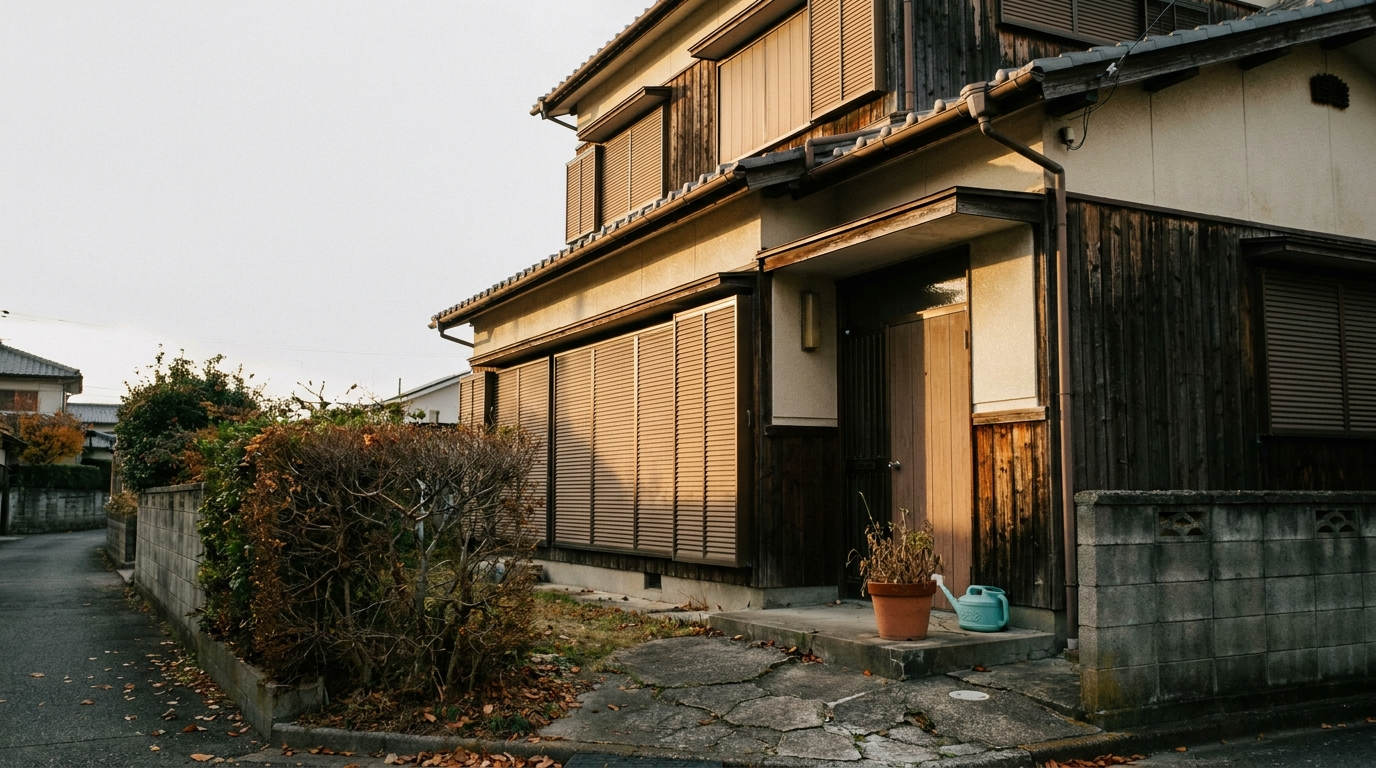
You lock the door in October and fly home. In your head the house stays exactly as you left it until you come back in April. Japan has other plans. Between those two dates the house will go through a humid winter or a freezing one, a rainy season, a typhoon or two, six months of post, and a garden that does not know you are away. None of that is dramatic on its own. It becomes expensive when nobody notices it for half a year.
Here is a full year of holiday home care, written as a checklist you can hand to whoever is looking after the place.
Before you fly out: the departure routine
The same short routine works whether you are leaving for six weeks or six months. Do it every single time, in the same order, so it becomes automatic.
- Turn the water off at the main stop tap, and know where that tap is before you need to describe it over the phone
- Decide deliberately which utilities stay connected. Many Japanese electricity, gas and water contracts carry a basic monthly charge that continues even at zero usage, so confirm the figures with each provider rather than guessing
- Empty the fridge completely, then leave the door propped open
- Open every internal door and cupboard, and leave a gap at the back of any wardrobe
- Redirect or arrange collection of post, and tell someone local that the box will need emptying
- Photograph every room, dated, before you leave. This is the reference you will want later
- Leave a spare key, the stop tap location and your contact details with a named person who can actually get to the house
Spring, March to May
The most comfortable months, and the ones where six months of accumulated problems become visible.
Open the whole house and air it for as long as you can. Check ceilings and the tops of walls for staining, which is where a small roof leak announces itself first. Run every tap, shower and toilet for a couple of minutes. Drain traps dry out over a long absence, and a dry trap lets drain odour straight into the room, which is the smell most owners mistake for damp.
Outside, this is the moment to cut back before growth accelerates. A hedge left from March reaches the street by August.
Summer, June to September: first the damp, then the storms
Two different risks, back to back, and they need different responses.
The rainy season runs roughly from early June to mid-July across Kyushu and most of Honshu, and Japanese summer humidity is relentless afterwards. A closed-up house in that air grows mould on tatami, futon, leather and the backs of wardrobes. If the house is empty through the summer, someone needs to open it and move air through it, and dehumidifiers need emptying rather than simply switching on.
Then comes storm season. Typhoon activity peaks in August and September, and tracks are published in English by the Japan Meteorological Agency’s RSMC Tokyo Typhoon Center. Before the season starts, someone should close and secure shutters, clear gutters and downpipes, and move or tie down anything in the garden that can travel. After a named storm passes near your area, the house needs an actual look, not an assumption.
Summer is also when wasps and hornets build under eaves and in roof voids, particularly on rural and semi-rural properties. That is a job for a professional, not for you on a stepladder in April.
Autumn, October to November
The quiet, useful season. Clear leaves out of gutters after they have actually fallen rather than while they are still on the tree. Check that shutters and window seals closed properly after the storms. Book any exterior work now, because contractors get harder to secure once winter sets in.
If the house uses kerosene heating, do not carry fuel across the year. Kerosene left in a tank through a hot summer degrades, and burning it the following winter is a genuine safety issue.
Winter, December to February
Everything here depends on where the house is, and the difference is not small.
In snowy regions and mountain areas, water left in pipes freezes and splits them, and the split is only discovered when it thaws and floods the house. Draining the water supply for the winter is normal practice in those areas, not an extreme precaution. Snow load on a roof and on eaves needs watching, and access to the property can disappear entirely for weeks.
In milder areas, including much of Kyushu, the winter risk is lower but not zero. Cold snaps still burst exposed outdoor pipes and water heater lines, and unheated rooms with closed shutters can hold damp for months.
Either way, a winter visit is the one most owners skip and the one that most often prevents a large bill.
Where the house is changes the whole calendar
Three broad patterns, and yours will sit somewhere between them:
- Snow country and mountain resorts. Winter dominates. Drain the water, plan for snow load and roof access, and accept that nobody may reach the house for a stretch of the season.
- Kyushu, Shikoku and the southern coast. Summer dominates. Humidity, rainy season and typhoon exposure are the main threats, and ventilation matters more than heating.
- Coastal properties anywhere. Salt air corrodes metal fittings, air conditioning units, railings and locks far faster than inland. Add a corrosion check to every visit.
Write your own calendar around whichever of those your property actually is, rather than around a generic list.
What a good visit report actually shows you
If someone local is checking the house for you, the report is the whole value of the arrangement. A useful one contains:
- The date and time of the visit, and who attended
- Dated photographs of the same fixed viewpoints every time, so you can compare rather than interpret
- Meter readings where relevant
- A clear list of what was found, separated into “no action needed”, “watch this” and “needs a decision from you”
- Anything found in the post box, with the sender identified and any deadline flagged
- What was actually done during the visit
The single most useful feature is the repeated viewpoint. One photograph of a ceiling corner means very little. The same corner, four visits running, tells you immediately whether a stain is old and stable or new and growing.
💡 NB Insight
The most common finding on a first visit after a long absence is not water damage or a break-in. It is a post box holding an official notice with a deadline that passed while the owner was abroad: a building association levy, a local tax slip, a utility notice, a request from the municipality. Damage is rare and dramatic. Missed paperwork is routine and quietly expensive. Whoever checks your house needs to be able to read what is in that box and tell you what it means, not just confirm the roof is on.
🎌 Cultural Note
In Japan an empty house is a neighbourhood matter in a way that surprises most overseas owners. An overgrown garden, an overflowing post box or a hedge across the pavement is not read as private business. It is read as a house that nobody is looking after, and neighbours will mention it, first to each other and then to the local office. Municipalities have legal powers to act on an akiya (vacant house) that becomes unsafe or a nuisance. A tidy frontage is not vanity. It is the clearest way of telling your street that the house has someone behind it.
Three things to take away
Build the year around where your house actually is. Snow country, humid Kyushu and a coastal plot are three different maintenance jobs, and a generic checklist will protect none of them properly.
The departure routine matters more than any single visit. Water off, fridge open, doors open, post handled, dated photographs taken, key with someone who can reach the house.
Photographs from repeated viewpoints are what turn a visit into information. Anyone can tell you the house looks fine. A comparable image tells you whether it is the same as last time.
If you are weighing up whether to keep the house for your own use or rent it out while you are away, those are genuinely different jobs. Our sister company Nippon Tradings International handles the rental investment side, and we look after homes kept for the family.
Want someone in Japan doing this on a schedule while you are at home? See how our holiday home management works, or send us a message and tell us where the house is.
This article is for informational purposes only and does not constitute financial, legal, or immigration advice. Consult qualified professionals for your specific situation. Insurance cover, utility terms and local requirements vary by provider and municipality, so confirm the details that apply to your property.
Internal link partner: our guide on dealing with Japanese city halls and government offices.